PODCAST
THEOS Cybernova: The Cybersecurity Podcast for APAC Leaders
THEOS Cybernova delivers expert cybersecurity insights for business and security leaders in APAC. Hosted by THEOS Cyber CEO Paul Jackson, each episode dives into real incidents, strategic responses, and the evolving role of cyber leadership.




Episode Summary
What happens when global systems are misused at massive scale?
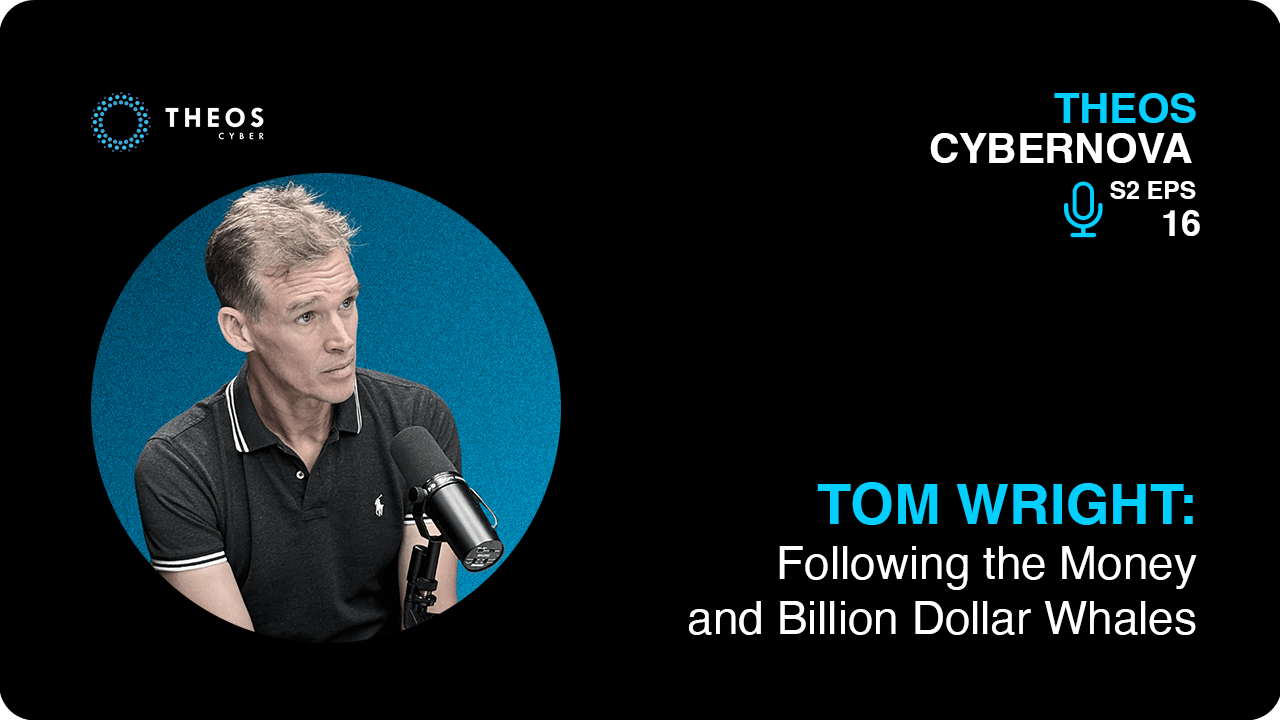
In Part 2 of the two-part Season 2 finale of THEOS Cybernova, host Paul Jackson continues his conversation with investigative journalist Tom Wright, co-author of The Billion Dollar Whale.
This episode looks at how financial and digital systems are exploited to enable modern corruption. Wright explains how crypto crime has changed the mechanics of fraud, allowing Southeast Asia scams to scale through weak controls and fragile on- and off-ramps.
The conversation also covers Havana Syndrome, the challenge of reporting on investigations that are still unfolding, and the pressure that comes with scrutinising powerful people and institutions.
A strong close to Season 2—and a reminder that many of today’s cyber risks are rooted in systems that outpace accountability.
About the Guest

Tom Wright is the New York Times bestselling co-author of The Billion Dollar Whale and the co-founder of Brazen, an independent TV and film production studio.
He is also the creator and host of Fat Leonard, a nine-part podcast about a military contractor who corrupted the U.S. Navy, and Crypto Kingpins, which explores the power struggle at the top of the cryptocurrency world. Tom spent over twenty years reporting from Asia for The Wall Street Journal and has lived in Thailand, Indonesia, India, Hong Kong, and Singapore. His investigations have exposed major corporate and government corruption. He is a Pulitzer Prize finalist, a Gerald Loeb Award winner, and was honoured in 2020 with the Shorenstein Award from Stanford University for his contributions to journalism in Asia.
Tom Wright
Bestselling Author, Film and TV Producer,
Co-founder Project Brazen
Tom Wright
Bestselling Author, Film and TV Producer,
Co-founder Project Brazen
Tom Billion Dollar Whale and the cofounder of Brazen, an innovative TV and film production studio.
Related Resources
Connect with Tom Wright: https://www.linkedin.com/in/tom-wright-819888a1/
About Project Brazen: https://projectbrazen.com/
Whale Hunting: https://whalehunting.projectbrazen.com/
Connect with Paul Jackson: https://www.linkedin.com/in/jacksonhk/
Connect with THEOS Cyber: https://www.linkedin.com/company/theos-cyber/
Connect with THEOS Cybernova: https://www.linkedin.com/showcase/theos-cybernova/
Episode Transcript
Paul Jackson: Welcome to the second of our two-part episode to close out season two of THEOS Cybernova podcast. I’m here again with Tom Wright, the co-author of the acclaimed bestselling book The Billion Dollar Whale. In this episode, we’ll be diving into the post billion dollar whale work, which includes fascinating topics such as the Havana syndrome, crypto heists, corruption in Thailand, Cambodia, and an alleged vendetta in Indonesia.
Thanks for continuing the conversation, Tom, and welcome back.
Tom Wright: Good to be here.
Paul Jackson: Well, to start this episode, I’d like to go back and just revisit again your journey to the beginning of Project Brazen and your relationship with it with Bradley Hope, it must have been a bold step for you to leave presumably pretty well-paid jobs with Wall Street Journal to go it alone.
Tom Wright: Well-paid, it was journalism, let’s not forget.
Paul Jackson: Okay. Fair enough. But yeah.
Tom Wright: No, okay I am being facetious. It was a great place to work and really loved my time. I was over 20 years there at Dow Jones and the Wall Street Journal. It was a fantastic workplace but it was more that, Bradley and I had formed this amazing partnership at the Journal.
He’s ten years younger than me, an American guy, I’m British. I was on a tram in Hong Kong, sitting on the top floor, when he called me for the first time ever, saying, “Hey, I see you’re working on this 1MDB story”. This is for the newspaper, and he and I know Abu Dhabi, I’ve seen that there’s a big element of the money that was stolen moving through the Middle East.
So that’s how I got to know him. There was a worrying moment where I quit as I said in the first part of our conversation, I quit the journal to go public speaking. Then that kind of imploded during Covid, then I decided to set up a company, and I was waiting for Bradley to quit the journal.
I was hoping, he was going to do so and he didn’t do it. I was like oh Bradley, come on, we got to do this. Eventually he did.
In 2021 we set up Brazen, initially called Project Brazen and we’re now calling it just Brazen. It’s been fantastic. In the last five years, we’ve created over 20 pieces of what we call intellectual property, which are basically like podcasts or books. Bradley wrote a fantastic book called Blood and Oil, about Mohammed bin Salman in the Middle East. We’ve won awards for our podcasts and our journalism won awards for, Havana syndrome for a couple falling, Fat Leonard. You can go and can listen to all these for free on Spotify or on Apple Podcasts or wherever you listen to podcasts, basically.
Yeah, now we are developing a slate of movie and TV shows and documentaries based on these pieces of IP.
Paul Jackson: Yeah, they’re awesome. I do encourage because obviously this is an Asia Pacific focused podcast, I do hope that our listeners out there will check out your site and subscribe to your valuable work, a very nominal fee, I think $6 a month or something.
Tom Wright: I think it’s free if you want it to be that there are subscriber benefits. If you want to. This is for the podcasts, you can subscribe to Brazen Plus and you get early access and it’s, subscriber only content. But yeah, no, this is something that everyone can just subscribe to for free.
Paul Jackson: Right, As a reminder to the listeners, the website is Project brazen.com and there is a subdomain of a whale hunting.project brazen.com, which has a lot of your ongoing.
Tom Wright: Yeah, whale hunting is where we’re breaking news and giving you weekend tips for what to listen to.
Paul Jackson: There are a dizzying number of exposes, if you can call it that, on the site. But how do you because obviously you must have people reaching out to you from all over. How do you prioritize? You’ve only got so many hours in the day. How do you prioritize? You know what you want to investigate?
Tom Wright: Well, you turned down a lot of stuff. I mean, honestly, like, you get I mean, I won’t go into details, but somebody contacted me over this just this weekend saying it had been this massive corruption scandal in a national sports federation. Just leave it at that. Right. And it sounds pretty interesting. And I think, you know, if I was a sports reporter with time on my hands to do that, I’d do it. But like, I just don’t have the bandwidth to do it. And we’re not we’re not a full newspaper, you know, with the with the time to really investigate everything.
So we would really take on stories that we think are either very important or with huge impact on an institution or a country. And then also, to be honest, we’ll do it because it has great narrative potential. That’s really one of the things we look for. So great characters and a great three-act structure.
Paul Jackson: Yeah. Interesting and how do you and Bradley divide the responsibilities then or?
Tom Wright: Bradley’s already the CEO of the company. He’s more business minded person. So he’s thinking about what kind of business lines we’re in, how we develop those. He’s actually very good with new technology and I don’t know if this is a he’s like an older millennial and I’m Gen X, or it could just be skill sets. But anyway, he’s very good at using AI. Figuring out how we use that to develop things. We would never rely on AI to do reporting, but we use it as we discussed in the first section to help bolster our reporting. He’s very, very good at that, but we kind of have a skunk skunkworks division that develops a lot of new products. I’m really like this sort of creative guy, so I’m like thinking about how we’re developing stories, what kind of structures we’re using to tell those stories, what kind of podcast we’re doing, what kind of magazine articles we’re doing.
Paul Jackson: Now let’s switch gears and talk about some of your investigations, because obviously this is a technical cyber podcast. You could call me an old cynic as an ex-cop, even in my work with THEOS Cyber, I seldom take things at face value. I always want to, have evidence and proof. But I’m really interested in the work that you’ve done on what is dubbed the Havana syndrome. I always thought in the past, I’d heard about it before, and I always thought this was a tinfoil hat kind of thing, where people were making stuff up, or it was just coincidences or whatever. But you’ve been really reporting quite heavily on this recently. Can you explain what the Havana syndrome actually means and why your research is uncovering perhaps more details on this rather scary-sounding threat?
Tom Wright: Well, Havana syndrome is called Havana syndrome because it was first noticed in Havana, Cuba. It was a mysterious illness which hit US service people. This was like State Department employees at the embassy, CIA employees working undercover at the US Embassy in Havana. They started complaining about headaches that were very, very debilitating. A number of people had to leave the service and go into retirement because they were unable to work because these debilitating head headaches.
Paul Jackson: So it was permanent.
Tom Wright: It was permanent, it then started to affect a number of other service people State Department, CIA and others, military around the world. A different US outpost, Shenzhen, Europe. The theory was that these were attacks by an invisible weapon developed by the Russians, sonic attacks,
Paul Jackson: So you see, this is where the tinfoil hat becomes a..
Tom Wright: Well, I got to say I’m sort of, as we.. the way we divide a work. I wasn’t actually that involved with the Havana Syndrome Podcast. So, I may be describing this slightly broad brush strokes, but the sufferers were not believed. That’s the sort of bottom line that this was like psychosomatic. But they had been making this up.
Nicky Wolf, who was, the way The Brazen Podcast often work is that we will partner with other journalists who have projects in the GIS, a great British journalist who wanted to do this project, we funded and worked with him to develop it. It won awards, the podcast for its soundscape.
We were able to sort of like replicate the pain of the sound that these people say that they’re suffering from. What we were able to uncover in the podcast, was we didn’t definitively say whether it was true or not, but we did come across the fact that the US had developed these weapons in the 90s. It wasn’t just the Russians developing, it was also the US. Then, just in the last few weeks, CNN reported that, I think this is about a month ago, CNN reported that the CIA have claimed to have purchased one of these devices from the Russians. So, using interesting. Obviously not out in the open, but the CIA managed to purchase one.
There was also a Russian operative arrested in Florida on the highway with it, with some kind of device in his backseat. It’s all very sort of mysterious, but it looks like this is a real undeclared warfare between the US and Russia using these sound waves basically to create a headache.
Paul Jackson: In your report, you state that this is a really expensive piece of tech, but is there a danger perhaps that advances such as AI could help develop this to be a more affordable tool for terrorists or organised crime groups?
Tom Wright: I honestly don’t know the answer to that. Yeah, it’s scary, it’s not all great for your podcast but I don’t know. But, I’d say the only thing that we’ve learned recently is that it seems that it’s been it’s clear that it’s been developed and it is real.
Paul Jackson: Well, I mean, anybody who looks at your website or the whale hunting part of it and you will notice that there are many follow-ups on this. So, you’ve done quite a few follow-ups. It’s obviously a hot topic on your end.
Tom Wright: Yeah. Because you know, we developed that documentary. It’s a great subject for a documentary. One of the issues we had with it was that the third act hadn’t been written. That’s often one of our challenges at Brazen is that we’re doing these stories that are really still bubbling or along. So, when you pitch them to Netflix or Amazon or whomever, they’re like, well, what’s the third act closure of this thing? And you’re like, it’s still ongoing and you got to find the right balance there.
If you do stories that are very historical, it’s also hard to sell them into Hollywood because people say, why do you want to do that 70’s story now? You know, like what’s the point? Also historical stuff is expensive to make.
If you have it ongoing or being very current, that’s a good sell. But you’ve also got to figure out how you how you tie up the fictional version of it or even or even the nonfiction documentary version.
Paul Jackson: So, in some ways, your career is almost obviously more factual investigative journalism to trying to be creative as well, you know, to try
Tom Wright: Yeah, I think that there’s truth in fictional versions of stories. You can do a very bad adaptation that sort of takes huge liberties, and that’s not good. But I think if you do an adaptation of a true story in a good way and in a sophisticated way, it could actually enhance the truth. Also, you’re just going to reach a much larger audience. I talked about that earlier about attention, a book like Billion Dollar, well, it sold a lot of copies, but a film version of it will get to many more people.
Paul Jackson: Okay. Well, I’m definitely looking forward to seeing the film version then. Anyway. Okay, so switching to another topic then that, that you focused on in your reporting, it was around Venezuela, which of course has been talking about topical is extremely topical at the moment.
But one of the things from our point of view, on this podcast, is looking at how money gets laundered through cryptocurrencies and how the criminal organised crime groups use it, etc. As I say, it’s a core focus for us and indeed was the subject of a recent THEOS Cybernova podcast that we made with Jussi Aittola from the Sphere State Group, whose company traces crypto assets, which is not an easy thing to do.
So Venezuela was back in the news recently, and in connection with a bit of a Bitcoin mystery, because back in 2018, Maduro, the president, made headlines by launching the first state-backed cryptocurrency called the Petro, which was backed by Venezuela’s vast oil reserves. Now speculation exists that the crypto assets linked to this could be in the tens of billions of US dollar value. You’ve been investigating who may control these assets, so can you update us on how you do this and the latest status?
Tom Wright: Well, again, you’ve caught me on a story that’s more Bradleys now. Okay, so I’m not deep in the weeds on this, but this is a there was a fascinating connection between an earlier podcast we did with Fat Leonard and this story, which was there’s this interesting character called Alex Saab, who was Maduro’s bagman.
Basically, he’s not a Venezuelan. He’s a Colombian, he was arrested in, I think, the Cape Verde Islands by the Americans and wanted for being sort of like a drug mule or a money mule for the Maduro regime. That guy was arrested. He was eventually a prisoner swapped with Fat Leonard, who’s I guess pretty complicated with Leonard was the subject of another podcast we did called Fat Leonard. He’s a guy who corrupted the US Navy, was a, is a contract of the US Navy through big parties for admirals, including orgies and gifts for their wives and all this kind of stuff. Huge national security risk for America. Was arrested and went on the run to Venezuela, was arrested in the US, went on the run to Venezuela, was rearrested in Venezuela. The prisoner is swapped for this guy Alex. So the Americans got Fat Leonard back, and he’s in jail in San Diego, and Maduro got Alex back. Why did he want Alex Saab back so badly? Well, he was he knew all the secrets of the Maduro regime. This guy, Alex, solved it.
Paul Jackson: How did the how did he get involved with it in the first place?
Tom Wright: I’m not so sure about what Alex Saab’s original connection Maduro is, and then what Bradley’s been reporting on more recently is, is his role, Alex Saab’s role in the crypto project Crypto Fortune. And in Whale Hunting, Bradley put out a post recently that did very, very well, got a huge readership that that the Maduro regime could be one of the biggest holders, the holders of Bitcoin in the world, with Alex, are playing a huge role. That’s why Maduro was so keen to get Alex Saab back to Venezuela and did that prison swap for him.
Paul Jackson: Yeah, that that’s a pretty crazy story obviously. As well as you know, if it’s not your key, it’s not your money, is the is the sort of saying in crypto. And who actually holds that key is going to be a very interesting story, right?
Tom Wright: Yeah, I mean again, I’m not a crypto expert but I do think that the world for criminals has changed significantly with the advent of Bitcoin. If you look back at the one 1MDB Scandal, you know, Jho Low had to move money in the old fashioned way, right? He took over Swiss banks and he found failing Swiss bank where he could take them over with his cronies and then have ways to move money in the Benjamin Mauerberger, story that we’ve been talking about over the last episode.
We’ll talk about more today. This South African who was washing billions for the crypto scams in Cambodia. They are relying much more on crypto to move money around, and crypto is clearly… I need to tell you, it’s got a massive use case for criminals.
Paul Jackson: Oh, 100%. Yes, it would be interesting if the 1MDB scandal had actually happened later, wouldn’t it, to see how the fund transfers would have differed.
Tom Wright: Or to find out what you know, Jho Low is still sitting on billions of dollars of stolen money.
He didn’t give it all back, and how much is it using crypto today? I’d say a lot, right? We don’t know; we don’t have any reporting on that. But I’d say he’s sitting in China. I’ve heard rumours that he’s helping move Iranian oil in the past and that all involves crypto these days as well.
Paul Jackson: Very interesting stuff. Suddenly, there’s a lot of use cases around crypto in the underground economy and talking about the underground economy. In another recent podcast on the THEOS Cybernova, we interviewed a guy called Steve Santarelli, whose work with Team Cymru in the US sheds light on the underground economy and organised crime groups who are responsible for the plethora of scams that we see online.
So, obviously, it brings us to something we’ve been alluding to throughout these two-part podcasts, that one of your recent major investigations sheds light on the Chinese Cambodian scam centres and how the proceeds are laundered. So could you tell us more about this and what triggered your investigation in the first place?
Tom Wright: So this is like one of the biggest cases of malfeasance at the moment. Oh, actually, just say corruption don’t need to use big words. Yeah, I was getting told off by Bradley for being British and using these words, the French borrowed words that English people would like to have the people know about the scam economy. I think everyone knows someone who got scammed.
Right, you know the phone calls you get that are very irritating if you live here in Singapore or anywhere, I suppose. The US estimates that about $200 billion a year is lost in savings to these scams, which is larger than the annual revenues of General Motors or Ford. I mean, it’s incredible. They often target lonely people. They have a romance element to them. The people who are carrying out the scams are also victims. These are typically Africans or Asians who are lured to Cambodia with the promise of what they think are good white-collar jobs, maybe like four times their last salary. Maybe they’re going to make 40 grand a year, 50 grand a year.
So, they’re lured there. When they get there, they find that they’re virtual slaves kept in these compounds behind barbed wire.
Paul Jackson: Their passports taken away
Tom Wright: They’re taken away under fictional debt. So we paid for your flights here or whatever, and then they’re sort of tasered and forced to work 17 hours on the phone scamming. The biggest part of this scam, there’s a sextortion part, which is teenagers in America sending nude photos into what they think is a sex site and then getting extorted.
There have been suicides, but the largest part is like fake crypto, oh look at my Maserati. Look at me, I’m a beautiful woman, I’ve invested in this, you should invest in fake crypto sites that then lure you into invest. Look like you’ve made some money on the site digitally, but it’s just a whole fake site. Then, eventually, you lose real money. You put real money in and you lose, you lose it.
The way that it works is that the crypto is stolen. It’s exchanged for maybe $0.80 on the dollar with one of these companies in Cambodia, these money changers, like Queen, that’s now shut down. And then you have this: you have cash, you have U.S. dollar cash, which maybe dollars at tourist spot in. And they’re visiting Angkor Wat or something. Then you have to do something with those dollars. That’s where this guy, Benjamin Mauerberger comes in. And as I mentioned in the first part of this conversation, he came on our radar because he was buying $30-40 million planes for Cambodian princelings.
That’s how he came on our radar. His job now, bogus job, former boiler room operator, was to help move the billions of dollars we’re getting stolen from these scams. The way he did it was, they set up a bank in Cambodia called B.I.C. Bank. You won’t find Mauerberger’s name on any of the ownership documents. But him and his Cambodian partner, Yim Leak own that bank.
And then you know, when the crypto is exchanged into those dollars, it was taken into the bank and it was that was into the system, and it was moved into Thailand by a correspondent banking relationship with Kasikorn Bank. Then they had oodles of cash to start bribing everyone in Thailand to help to launder this huge amounts of cash.
In the beginning they were taking suitcases on private planes with chains around them.
Paul Jackson: How do you know that?
Tom Wright: Without getting into the source, it’s just we know it. Yeah, you are to protect the sources. But yeah, this is all first time. I wouldn’t say this stuff without being backed up.
Once it was in Thailand, the huge amounts of money, I think this was, Mauerberger himself was showing off that he had $4 billion of assets, which makes these scams really took off after Covid as well.
Paul Jackson: Well, I saw a lot because as a former cop, a lot of victims who felt they weren’t getting support from the police would come to companies like THEOS and try to get help with recouping the money they’d lost, which of course is a fantasy, unfortunately, it is gone.
Tom Wright: Or class action lawsuits as well.
Paul Jackson: Yeah, but you know what is so difficult, you feel very sorry because there’s very little sympathy. I think people typically say, how could you be so stupid to fall for something like that? And that’s really insulting to the victims, because these scams are very clever, they’re very compelling, they play on psychology so very well.
I can understand why there are these huge sums that you talk about. But 4 billion? That’s an eye-watering amount.
Tom Wright: Well, yeah, I mean, like I said, if 200. Well so they’re working on the assumption that in America that only 5% of these kinds of cases ever get reported. It’s quite shameful to admit it. So that’s how they come to the 200 billion estimate; it’s huge. What this meant was that Mauerberger. So Benjamin Mauerberger, a South African from Cape Town, grew up in Cape Town, best private school and went to Bishop’s School in Cape Town, ran boiler rooms in the early 2000 in Bangkok. There was a big one called The Brinton Group. You might remember from your police days that it was shut down.
He has his history of escaping every time. So his friends or his co-conspirators would always go to jail and he would escape. And anyways, world narrowed. Couldn’t travel to various countries because of all the boiler and past, he ends up sort of getting his Cambodian diplomatic passport and playing this huge role for, we should say the scam centres are, run by Chinese mafia. They’re not run by Cambodians, the Cambodians. This is a lawless country that the Chinese mafia is able to operate in.
In this case, in Mauerberger case. The scam centres will run by a guy called Deng Pibing and his company Zhengheng. They had they had gone in and tried to build this huge tourism resort on the with Chinese money under the Belt and Road Infrastructure project from China.
It takes them about a third of Cambodia’s coastline and totally failed. Nobody wants to go on holiday. They’re just empty buildings and it ended up becoming and this is true of a lot of these Asian. All casinos didn’t work out and ended up becoming scam centres. So that was the that’s the genesis of how this scam census developed. The Mafia move in and they run these scam centers with the with the slaves. Mauerberger then became very powerful in Thailand, the neighboring country to Cambodia, because he had so much money at his disposal needed to launder it. So he ends up helping Thaksin Shinawatra come back to power is obviously the former prime minister of Thailand, who’d been in exile for corruption for many years, had come back. And Mauerberger became very important to him because he has the financing for his political comeback, including some of the parties in his coalition. So that’s basically what Mauerberger did. Mauerberger was turning up a cabinet meetings in Thailand and telling the finance minister of Thailand, I outrank you and that because he had so much money and he plowed that into Thailand system.
So Thailand was on the precipice of becoming a captured state, much like Cambodia is. I’m proud of our reporting because we exposed it, and Mauerberger is now on.. stays on the running. He’s been indicted, but he had to leave Thailand. He’s now in Dubai. As far as we know, $300 million of assets were seized by the Thai authorities, including a boat that he owned.
Another 100 million boat that he owns now in Dubai, in the harbour there, which is something we’re seeing more and more of Dubai playing this role for people who were otherwise wanted elsewhere.
Paul Jackson: And this is all down to your reporting.
Tom Wright: Yeah. No one else has reported about him. So yeah, we’re proud of what we did. In Thailand, they’ve got elections coming up next month in February. And this is playing a huge role, this this realisation in Thailand, country with a lot of smart people, a lot of real industry that their governing class and their political system was basically taken over by this scam centre money.
If you look at the border war that’s been going on between Thailand and Cambodia, you’ll see that the Thai’s recently have been Thai Air Force has been blowing up Cambodia scam centers. Part of what’s going on is that the current prime minister is trying to distance himself from Mauerberger by saying, we’re attacking these scam centres and this is a Cambodian problem. And Mauerberger is a Cambodian problem. But ignoring the fact that he got so high up inside the Thai system.
Paul Jackson: Very interesting. You told me earlier that, you know, you’re a keen cyclist, and that you may be planning on going to Thailand. Are you happy about that?
Tom Wright: Well, yeah. I mean like I said, we talked about safety earlier right? I think I didn’t receive any threats on this story at all, like in terms of stop doing this or will get you nothing, like that happened. But we did receive a lot of legal threats. One was from the Deputy Prime Minister of Thailand, who threatened me with an Interpol Red Notice arrest that never materialised.
We should talk about the crypto element of this, because we got a lot of, we didn’t get lawsuits, but we got cease and desist emails. Which is like the kind of cheap way to do it when you don’t have much of a case. So, KuCoin is a crypto company. Crypto exchange Mauerberger, when he became very powerful, it wasn’t good enough anymore to take bags of cash in private planes or to move it via this B.I.C. Bank that’s now shut down. So, what he was looking to do is create an on-off ramp between crypto and the finance system.
Paul Jackson: Yes. Which is always the challenge, isn’t it, to.
Tom Wright: Well, do you want to explain to people what an on-off ramp is?
Paul Jackson: Actually, yeah, certainly. It’s the challenge of actually, you know, moving the crypto funds which are being gained illicitly — through the scams or through ransomware in our world or whatever it might be — into actual money, real money. I suppose you could call it fiat money.
Those on off-ramps are very difficult because there should be KYC in place. Know your customer, and increasingly, there is pressure on exchanges to make sure they understand who their clients are, that they shouldn’t be allowing the laundering of criminal proceeds.
Tom Wright: Right, so the way Mauerberger got around that was, it’s really incredible is that he teamed up with a crypto company called KuCoin. They illegally took over a Thai financial institution called Financier. What they were looking for is an on-off ramp, just to get all of it. The people at that time, like obsessed with creating this on off ramp. So Mauerberger, used his wife, his ex-wife, his Cambodian partner to buy up a stake in this company, Financier. He then offloaded it to this crypto company. KuCoin, last year, was fined $300 million in the US for allowing various criminal actors to use it. It’s exchange square was quite a big exchange at one point. Not as big as Binance, but fairly big. It’s now banned from operating in the US because of that.
Iranians, we were able to prove that Iranians have used KuCoin to move money, in contravention of sanctions. They basically along with KuCoin, he was able to take over this finance institution. Even more extraordinarily, he was able to set Thailand’s digital policy. So Mauerberger was involved in in writing digital laws in Thailand. For example, it’s illegal to do online sports betting in Thailand, but they created a sandbox, a regulatory area where they could do that, and he got 500 visas that he was able to use. He never did this, but he got the right to bring in worker IC workers under these 500 visa program. This is all part of his attempt to create this on-off ramp for crypto, because he needed to move so much illicit crypto and it’s just incredible that got. So anyway, going back to the legal thing, KuCoin sent us a cease and desist retract everything you’ve said about us all. We will sue you on what we’ve been doing is we’ve been publishing those cease and desist, which is probably not what any lawyer would tell you to do. But it’s been our, you know, we’re a small company, and that’s our way to sort of like say, look, you’re trying to terrorise us. Everything we’ve said is true. Here’s the cease and desist.
We put it out and let our readers kind of make their own decision about whether they think we’re lying or not. And until now, the cease and desist haven’t led to an actual lawsuit. So it’s really just an attack-dog attempt by their in-house lawyers to get us to stop looking at them.
Paul Jackson: Interesting. Interesting story. And again, I encourage you, you know, the listeners to check out the full story on your website. A couple more questions before we close up. Thank you again for spending the time; it’s been absolutely fascinating. But you know, you talk a lot about the dark side, and I keep referring to eye-watering sums of money. I mean, you know so much about this. Not tempted to go to the dark side?
Tom Wright: What? Take a bribe to not do something?
Paul Jackson: Yeah.
Tom Wright: Well, without naming a name, I’ll say a very wealthy person has tried to bribe me recently, to write something that would be in their favour. I ignored it. Look, I mean, we’re all reading the news these days and feel like a lot of things that we thought were carved in stone about how we operate. Societies aren’t carved in stone. We are getting into that. We’ve got time to get to all of that. But just at a very high level, I’d say a lot of us feel like when we’re hanging out with our friends or families, that the people are good, but then when we look at things like on a from 10,000ft, it looks bad, it looks corrupt, right?
Well, I guess what I’m trying to say is that the bigger systems are where the corruption happens, and that’s where you feel bigger countries, bigger amounts of money, bigger crypto companies. That’s when it’s easy to make, like what you might call an evil decision. Whereas when things are small and devolve, they just seem to be better and more healthy. I wonder if I’m making sense, but that’s my
Paul Jackson: You are, you are. And I’m glad you have this sense of ethics and what’s right and wrong because quite honestly, we need that. You know, as we close out this episode, I do have to congratulate you on your tremendous work. I mean, and I really honoured that you spent the time with me today to talk about all of this.
As I say, there’s much more to what you’re doing than in our brief discussions over these two podcasts. I’m sure our audience will be checking out your works and hopefully following you moving forward, just as I am. But I always close out the podcasts, and I haven’t primed you on this, by the way.
So, this will come out of the blue, but the work we do, both of us, can be quite stressful. My way of decompressing is to listen to music. I’m a real music fan, I’ve go big Hi-Fi setup, etc. and read a book whilst listening to music. So I like to ask my guests what music they listen to. I’m sure you must have eclectic music taste, but what’s currently on your playlist?
Tom Wright: Oh. So what did I have in my Apple Music 2025? The Weeknd, I listen to a lot, I like the weekend. I like Frank Ocean, so my teenage daughter got me into Frank Ocean, and I really like him. Then my son, who’s in middle school, got me into a Liverpudlian rapper called SD Kid, like, blacked out, like a phantom.
Paul Jackson: Do you listen to this while you’re cycling?
Tom Wright: No, I don’t. People are using those Shockz. You know, those bone conducting things to cycle with what I think is pretty dangerous. No, no, this is running only. But, yeah, The Weeknd is really my favorite thing to listen to you when I’m going for a run.
Paul Jackson: Thank you once again for joining us on these podcasts. One more reminder. You know, please don’t forget to hit that like and subscribe button on whatever platform that you’re listening to.
And we will keep you updated with news of season three. And after we take a break for a couple of months, and I promise you that we’re going to start that season with a bang.
Thank you so much for joining us, Tom.
Tom Wright: Thank you.
Recent Podcast
Episode 16 | Season 2
Following the Money and Billion Dollar Whales
What happens when global systems are misused at massive scale?
Episode 16 | Season 2
Episode 15 | Season 2
Following the Money and Billion Dollar Whales
How do you investigate people protected by money, power, and political influence?
Episode 15 | Season 2
Episode 14 | Season 2
Mobile Phone Espionage, Zero-Click Attacks, and Invisible Threats
If your phone were compromised, would you even know?
Episode 14 | Season 2
Episode 13 | Season 2
Trust, Community, and the Reality of Cybercrime Investigation
What really happens when a cyberattack becomes a criminal investigation?
Episode 13 | Season 2
Episode 12 | Season 2
When a Nation-State Attack Tests a CISO
What do you do when a nation-state attack hits days into a new CISO role and it’s already Friday?
Episode 12 | Season 2
Episode 11 | Season 2
Inside Ransomware Negotiations and the Ethics of Paying
What happens when companies negotiate with ransomware attackers?
Episode 11 | Season 2

Episode 10 | Season 2
Post-Quantum Security and the Shift Toward Crypto-Agility
Post-quantum security insights and why crypto agility is key to future-ready encryption
Episode 10 | Season 2
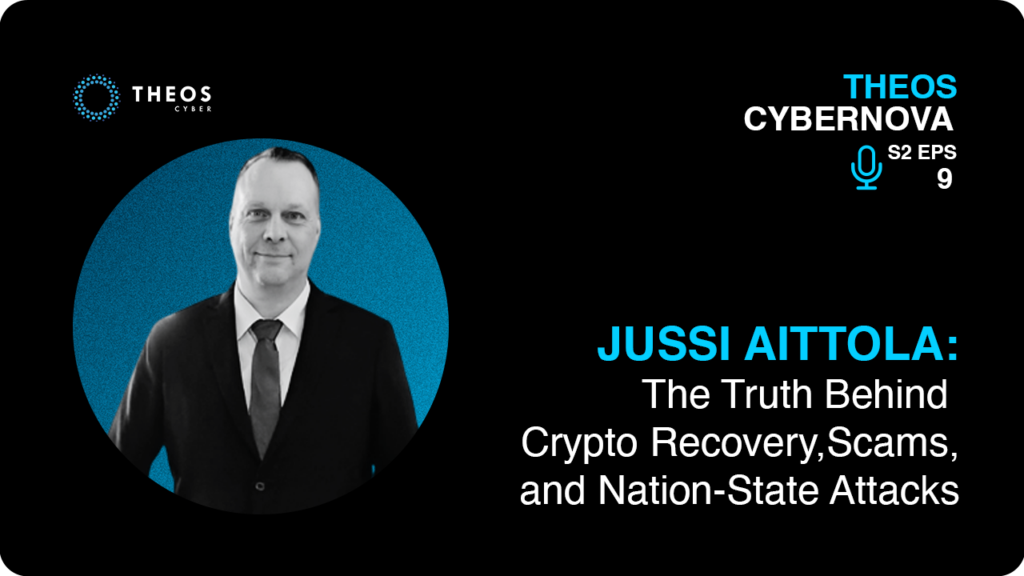
Episode 9 | Season 2
The Truth Behind Crypto Recovery, Scams, and Nation-State Attacks
Learn how crypto recovery works and what drives modern crypto scams with Jussi Aittola.
Episode 9 | Season 2
Episode 8 | Season 2
Navigating China Data, Cyber and AI Laws
Explore how China’s fast-changing data, cyber and AI laws impact consent, breach reporting and business risk.
Episode 8 | Season 2
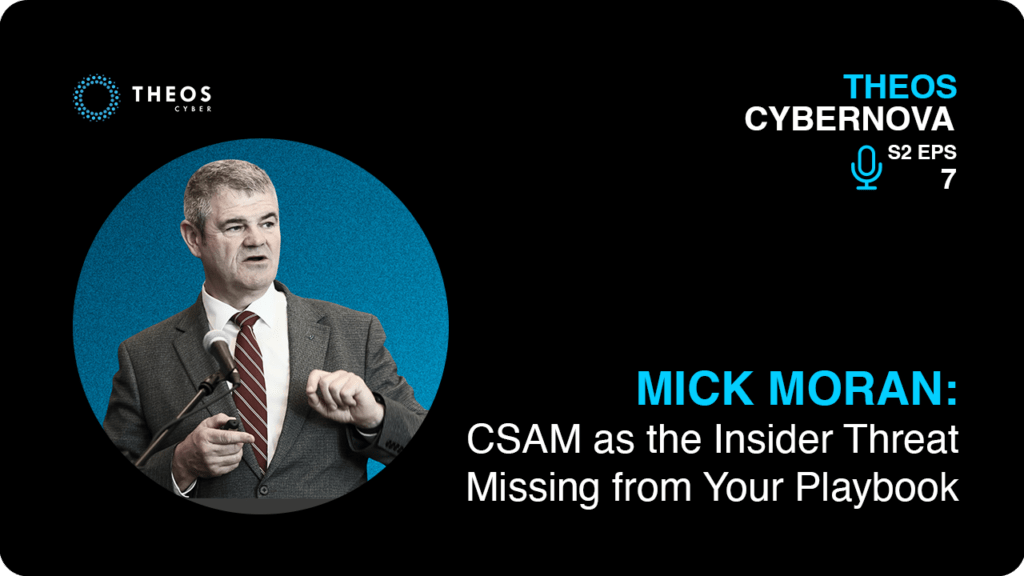
Episode 7 | Season 2
CSAM as the Insider Threat Missing from Your Playbook
Mick Moran on why CISOs must treat CSAM as a cybersecurity risk, with lessons on detection, policy, and response.
Episode 7 | Season 2
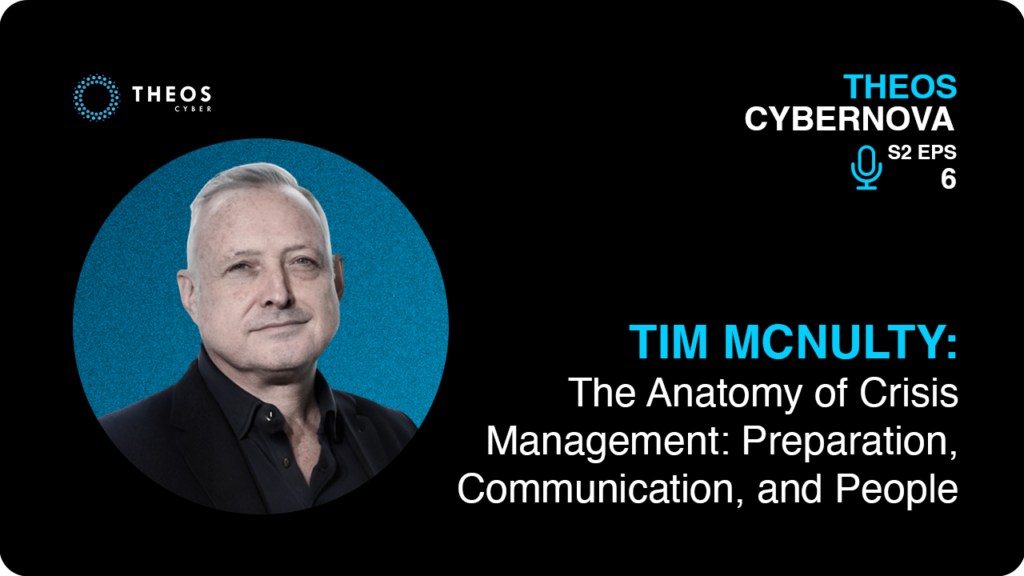
Episode 6 | Season 2
The Anatomy of Crisis Management: Preparation, Communication, and People
When crisis strikes, will you be ready? Hear how Tim McNulty turns disruption into resilience.
Episode 6 | Season 2
Episode 5 | Season 2
Cyber Scams in Asia: Victim Blaming, Underreporting, and the Need for Change
Why are cyber scams soaring in Asia while victims are blamed and fraud goes unseen?”
Episode 5 | Season 2

Episode 4 | Season 2
APAC Cybersecurity Challenges, Brain Drain, Data Privacy, and AI
Cybersecurity, privacy, and regulation—how are APAC companies keeping pace?
Episode 4 | Season 2
Episode 3 | Season 2
From ROOTCON Pioneer to Leading Offensive Security in APAC
Jayson “JV” Vallente’s journey reflects the rise of ethical hacking and offensive security across APAC.
Episode 3 | Season 2
Episode 2 | Season 2
From Scotland Yard to Manila—Building a Cross-Border Cyber Investigations Practice
From vice squads to digital forensics, one journey shows how cybercrime and response evolved.
Episode 2 | Season 2
Episode 1 | Season 2
Inside the High-Stakes World of Digital Forensics and Incident Response
How do the best in DFIR respond when there’s zero room for error—and no time to waste?
Episode 1 | Season 2
Episode 12 | Season 1
Navigating Privacy, AI, and Cyber Law in APAC
How can organizations stay resilient as privacy regulations lag behind rapid digital threats?
Episode 12 | Season 1
Episode 11 | Season 1
Cybersecurity, Leadership & Breaking Barriers
How do you secure a multinational company while navigating complex cyber regulations and evolving threats?
Episode 11 | Season 1
Episode 10 | Season 1
Cyber Journalism, Crisis Comms & the Power of Storytelling
How do journalists uncover the truth behind cybercrime?
Episode 10 | Season 1
Episode 9 | Season 1
Turning the Tables – 100 Days as CEO
What happens when the host becomes the guest?
Episode 9 | Season 1
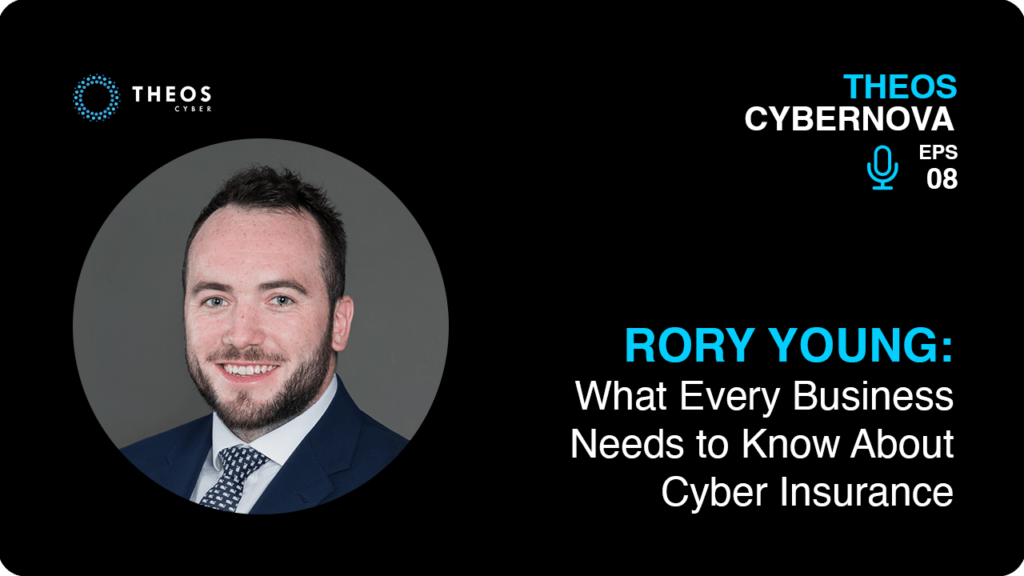
Episode 8 | Season 1
What Every Business Needs to Know About Cyber Insurance
When a cyber incident occurs, can your cyber insurance policy come to the rescue?
Episode 8 | Season 1
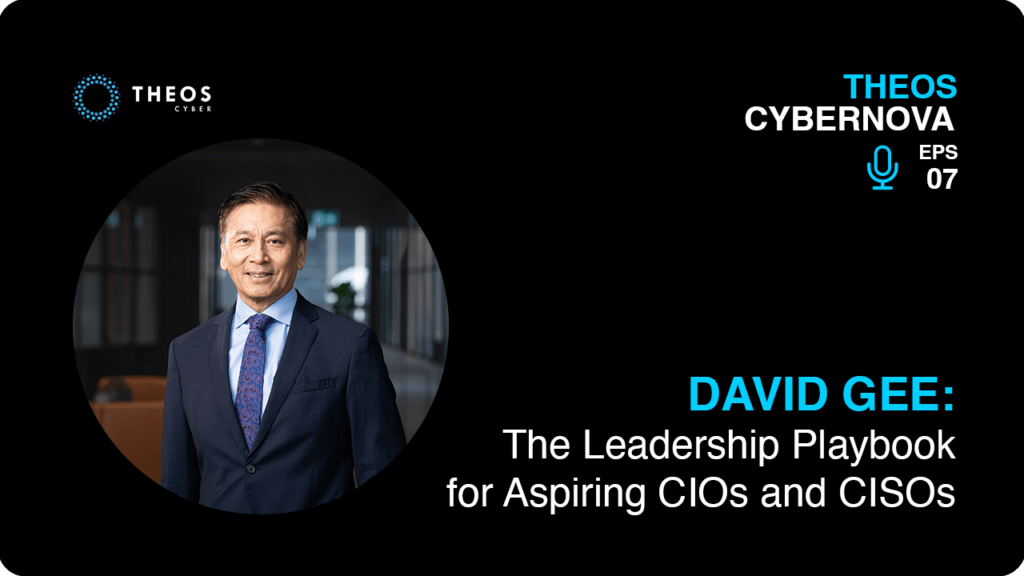
Episode 7 | Season 1
The Leadership Playbook for Aspiring CIOs and CISOs
What does it take to transition from a cybersecurity practitioner to a strategic leader?
Episode 7 | Season 1
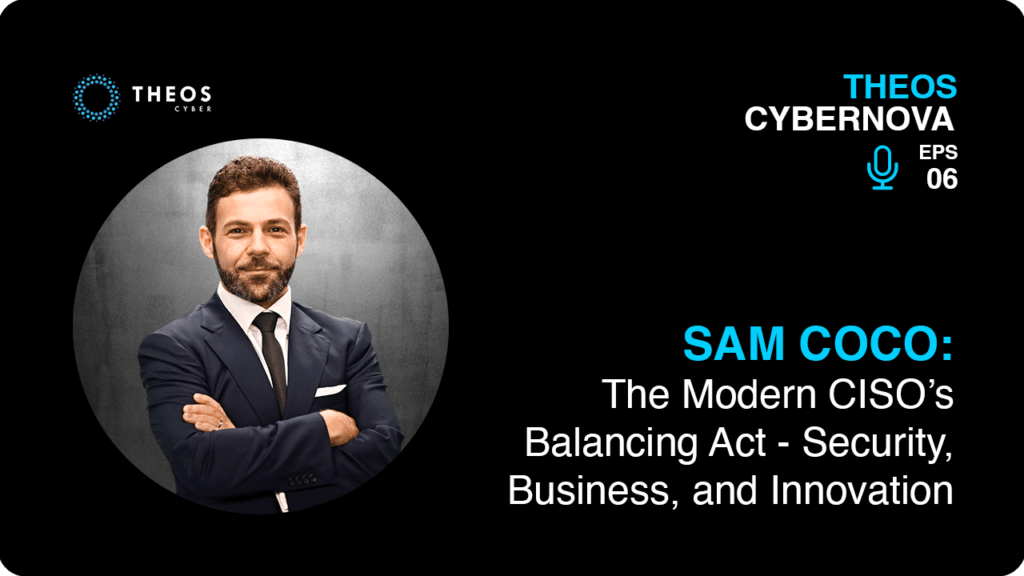
Episode 6 | Season 1
The Modern CISO 's Balancing Act - Security, Business, and Innovation
Is the traditional CISO role obsolete?
Episode 6 | Season 1
Episode 5 | Season 1
Crisis Leadership When Cyber Attacks Strike
What happens when a ransomware attack hits, and every decision counts?
Episode 5 | Season 1
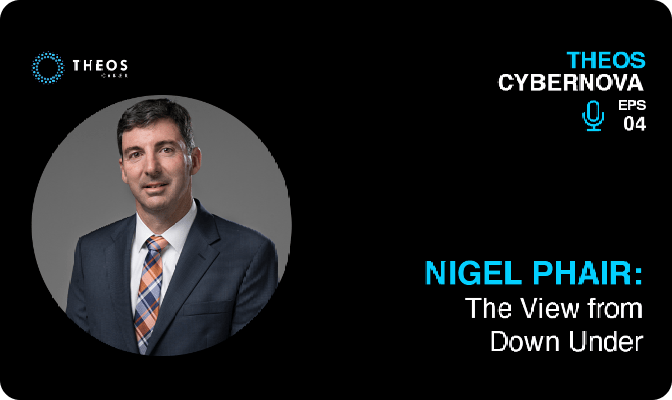
Episode 4 | Season 1
The View from Down Under
What makes Australia’s cybersecurity landscape unique.
Episode 4 | Season 1
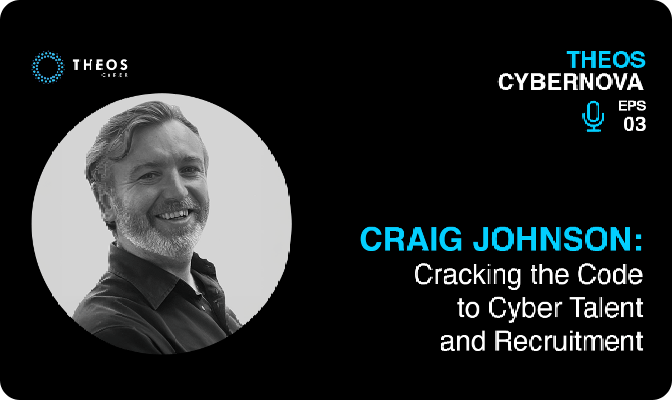
Episode 3 | Season 1
Cracking the Code to Cyber Talent and Recruitment
Explore strategies for finding and nurturing top talent in the cybersecurity industry.
Episode 3 | Season 1
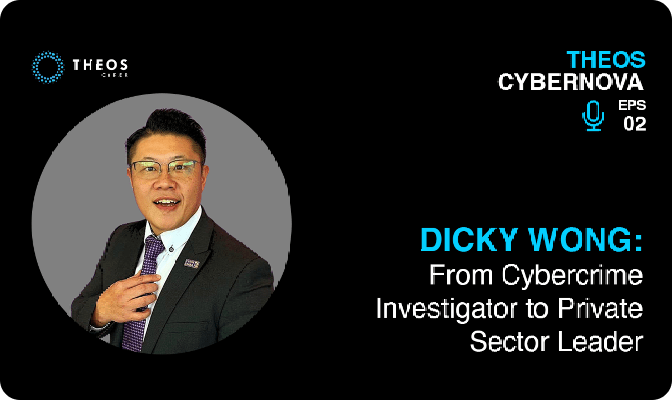
Episode 2 | Season 1
From Cybercrime Investigator to Private Sector Leader
Follow the transition from cybercrime investigator to a leader in the private sector.
Episode 2 | Season 1